
How “Agentic Employees” Are Quietly Wiping Out Entire Industries in the Last 48 hours?
The jobs everyone said were "AI-proof" are vanishing. And most people still haven't noticed what quietly happened in the last 48 hours. How can you survive this market?
How Agentic Employees Are Quietly Wiping Out Entire Industries in the Last 48 hours?
And why the most dangerous place to be right now is comfortable.
Cybersecurity stocks, long considered recession-proof and AI-proof, took a serious beating this week. And the numbers aren't small.
CrowdStrike dropped over 9% in a single trading session. Palo Alto Networks shed nearly 4% after already being under pressure from a disappointing forward guidance it issued earlier this year. SentinelOne and Zscaler followed suit, dragging the entire sector into the red. The ETFMG Prime Cyber Security ETF (HACK), a broad index that tracks the industry, posted one of its sharpest single-week declines in recent memory.
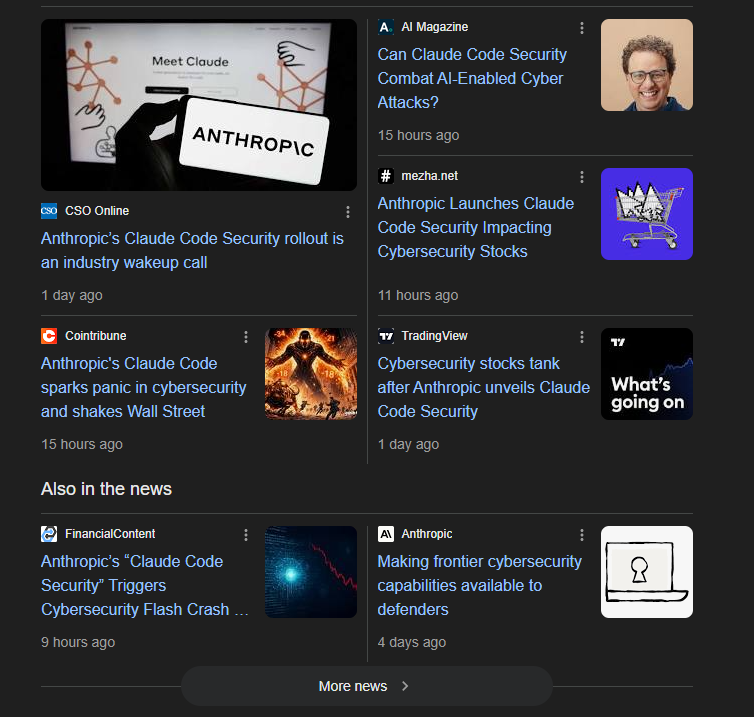
Agentic AI systems are beginning to monitor networks, detect anomalies, respond to threats, and patch vulnerabilities autonomously, doing in real-time what entire SOC (Security Operations Center) teams of analysts used to do across rotating 24-hour shifts. When investors saw demos of agents independently identifying and neutralizing intrusion attempts without a single human in the loop, the calculus changed instantly.
The market wasn't saying cybersecurity is dead. It was saying: the labor model that powers it just got disrupted.
Think about what a traditional SOC looks like today. Dozens of analysts staring at dashboards, triaging alerts, escalating incidents, writing reports.
Now picture a squad of coordinated AI agents doing the same job with faster reaction times, zero alert fatigue, and no shift handover gaps. The threat detection doesn't slow down at 3am. It doesn't miss an alert on a Friday evening before a long weekend.
The irony?
The very technology that cybersecurity companies were supposed to defend against is now eating their business model from the inside.
The Anthropic Aftershock That Started It All
But to understand how we got here, we need to rewind!
The original spark was Anthropic. Their release of Claude with a feature called "Computer Use" seemed understated at first glance. Just a demo, right? Just another benchmark number?
No.
For the first time, an AI wasn't predicting the next word in a sentence. It was moving a mouse, clicking buttons, and navigating an operating system not because it was scripted to, but because it reasoned its way there.
Investors opened their laptops. Then they opened their portfolios. Then they started selling.
Companies that relied on large human-heavy operations, the massive BPOs, the sprawling consulting firms, the 10,000-seat outsourcing centers, watched their market caps fracture almost overnight. Not because their businesses disappeared. Because investors could suddenly picture a future where a 200-person project gets done by one architect and a squad of tireless digital workers.
That future has a name. It's called the Agentic Employee.
What Even Is an "Agentic Employee"?
Think about how you use a standard AI tool today. You type a question. It answers. You type another. It answers again. It sits there, completely passive, waiting for your next move like a very smart calculator.
Now imagine instead of a prompt, you give it a mission.
"Scan our last 500 support tickets. Find the three most recurring bugs. Cross-reference them with our open GitHub issues. Then draft a priority report and drop it in the dev team's Slack channel before EOD."
You don't type a follow-up. You don't micromanage the steps. The agent reasons through it, choosing which tools to use, calling the right APIs, self-correcting when a query returns nothing, and iterating until the job is done.
That's not a chatbot. That's a coworker who never sleeps, never loses focus, and doesn't ask for a salary review.
The difference between a passive AI and an Agentic Employee is the same difference between a hammer and a contractor. One waits. The other gets to work.
This Is Already Happening In Production, Right Now
Forget the lab demos. Forget the LinkedIn thought-leader threads. These case studies are live.
Klarna deployed an AI agent that absorbed the workload of 700 full-time human agents in a single month. It wasn't just answering FAQs. It was processing real refunds, resolving complex billing disputes, and closing tickets end-to-end.
Replit's Agentic Coder lets you describe an application in plain English. By the time you finish your coffee, the agent has spun up a server, written the backend logic, and deployed a live product. What used to take a junior dev team three weeks now takes one conversation.
Easterseals, a US healthcare provider, replaced an entire claims-processing department with a squad of six specialized agents. Insurance approvals that previously took 30 days now close in 72 hours.
Darktrace's autonomous threat response system now handles the majority of security incidents across its enterprise clients with no human intervention at the detection and containment stage. What used to require a team of six analysts now runs on a single agentic pipeline.
These aren't outliers. They're previews.
Under the Hood: How Agentic Systems Are Actually Built ?
Here's where it gets interesting because building a digital worker is an architectural problem, not a prompting problem. The engineers doing this at scale aren't just writing clever prompts. They're designing systems.
The ReAct Loop: Giving the AI an Inner Monologue
The engine at the core of every serious agent is a reasoning loop. At each step, the model generates a Thought (What do I need to do next?), takes an Action (Query the database), and processes the Observation (Did that return what I expected?).
MCP: Giving the AI Actual Hands
An agent with no access to the outside world is a brain in a jar. Model Context Protocol (MCP) is the bridge. It connects the agent to your local file system, your databases, your CRM, your Slack workspace. Suddenly, it can do things, not just say things.
Multi-Agent Orchestration: Building the Squad
The smartest teams don't use one massive agent trying to do everything. They use frameworks like LangGraph to build specialized roles: a Planner that sets strategy, a Researcher that hunts for data, a Validator that sanity-checks the logic. These agents communicate with each other, challenge each other's outputs, and only surface a result when the whole squad agrees.
RAG: Building the memory
Agents don't know what we are talking about. Fix is giving them data so it operates on facts, not imagination. An agent grounded in your private knowledge base is exponentially more useful and exponentially less dangerous than one making things up.
No Industry Has a Moat Anymore
If an industry built entirely on staying ahead of sophisticated threats, staffed by some of the most specialized and highly paid professionals in tech, can still get disrupted by agentic systems, then the question is no longer which industries are safe. The question is how fast is yours moving.
BPOs thought volume was their protection. It wasn't.
Consulting firms thought strategic judgment was their protection. Agents are reasoning now.
Cybersecurity firms thought complexity was their protection. Agents don't get tired or confused.
The pattern is the same every time. An industry assumes their work is too nuanced, too specialized, too human for automation. Then an agentic system ships a demo. Then it ships a product. Then the stock drops.
What Now?
If you're questioning what should your next step be towards not getting replaced, but being chosen for your innate skills and knowledge of building - You are in the Right Place!
We are kicking off our AI Engineering 2.0 Bootcamp, where we don't just show you these tools - we teach you how to build them, so you become the one who doesn't getting "clawed" out but the one who actually builds it.
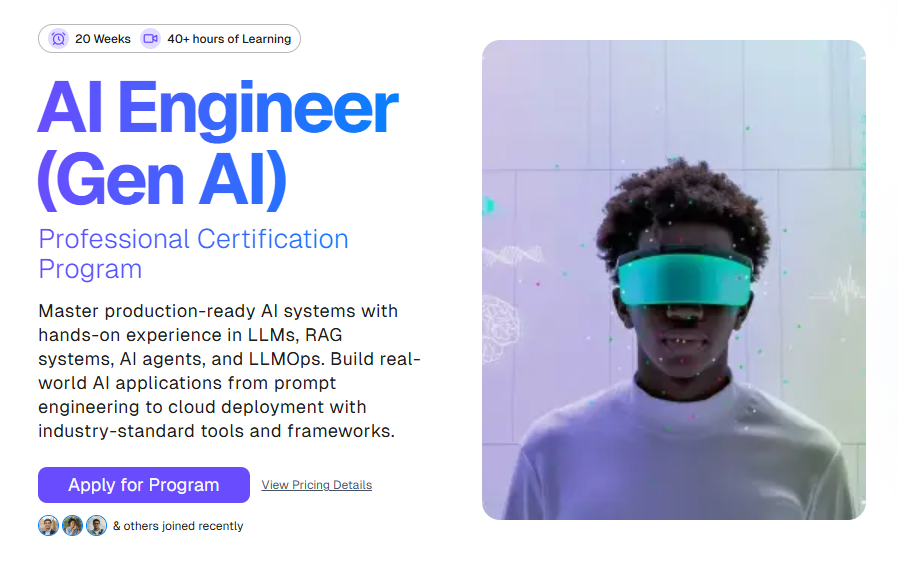
To get a clear picture of what you will learn and the future that beholds, join our Free AI Engineering Webinar and start building next-gen agents!
Ready to explore the bootcamp and see if it is for you? Join Now!
You may also like

What Is TypeSafe AI?
Discover Jev, TypeSafe AI’s System One Model for fast, type-safe, calibrated AI decisions built for software automation.

What Is Paperclip and How Does It Help You Manage AI Agent Teams?
Learn what Paperclip is, how it manages AI agent teams, controls costs, enables human approvals, and coordinates agents across different AI runtimes.

How Do You Actually Teach Engineering Judgment?
Learn how STEMLink teaches engineering judgment through a four-step approach: learn, build, test limitations, and understand why real-world systems need more.