
Gemini Omni
Think about how every AI interaction you have ever had actually worked. You typed something. It typed back. Maybe you uploaded an image and it described it. Maybe it generated a picture from your words. But at every step there was a wall. Information went in one form and came out in another. The model was always translating, always converting, always losing something in between.
Gemini Omni
Text in, text out. Image in, text out. We accepted that as normal. Gemini 2.0 Flash Omni just made it look embarrassing.
Think about how every AI interaction you have ever had actually worked. You typed something. It typed back. Maybe you uploaded an image and it described it. Maybe it generated a picture from your words. But at every step there was a wall. Information went in one form and came out in another. The model was always translating, always converting, always losing something in between.
That wall just came down.
Video In. Video Out. That Is the Shift.
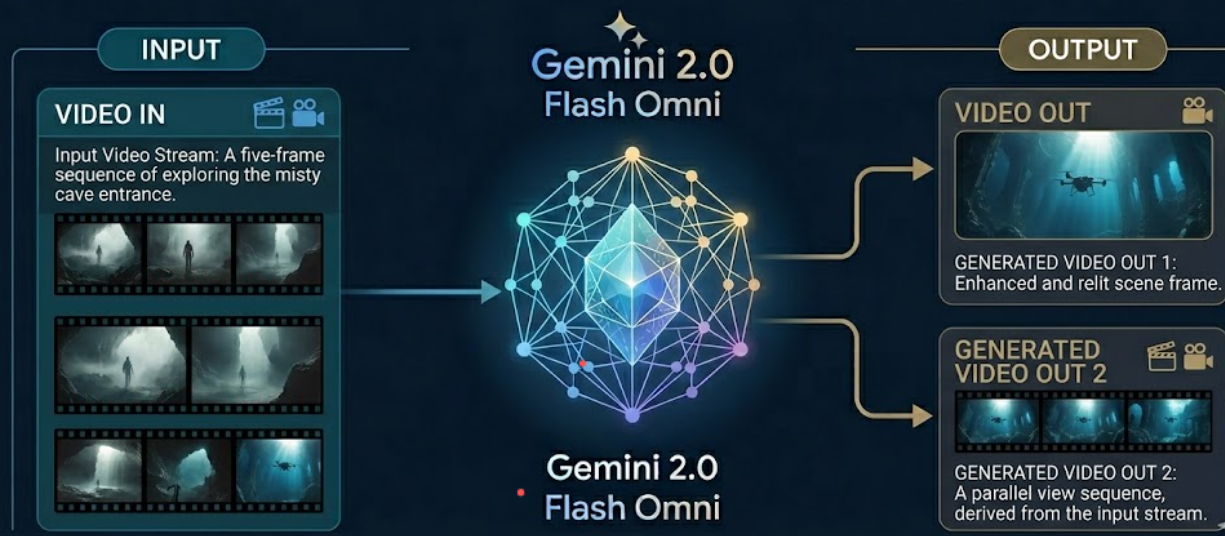
Gemini 2.0 Flash Omni is the first model that can take in video and produce video out natively. Not text describing a video. Not a static image. Actual video output in response to video input. Pair that with native audio in and audio out, real time screen understanding, and simultaneous multimodal processing and you are not looking at a better chatbot. You are looking at something categorically different from everything that came before it.
Every other model you have used, including previous Gemini versions, including GPT-4o, processes different inputs as separate streams and stitches a response together at the end. Gemini 2.0 Flash Omni processes everything natively together in one pass. Your voice, your camera feed, your screen, your document, all understood simultaneously, all informing a single coherent response that can come back as text, speech, image, or video.
That is not an upgrade. That is a different thing entirely.
What This Actually Feels Like
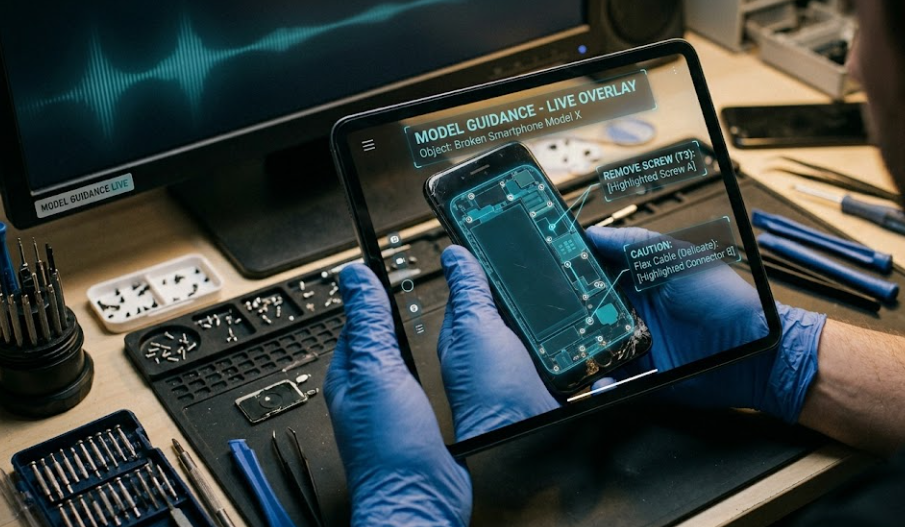
Point your camera at something broken and have a live back and forth conversation about how to fix it, with the model watching through your camera the entire time as you work.
Share your screen while coding and have it watch silently in real time, speaking up only when it spots something wrong, like a senior developer sitting next to you who never zones out.
Show it a physical document, talk through it out loud, and have it respond in your language while simultaneously translating for someone else on the call in theirs.
Give it a video brief and receive a video response. Not a description of a video. A video.
None of this involves switching modes, uploading files, or typing a single word. It is all happening live, all at once, in a conversation that actually feels like a conversation.
Why Flash and Why It Matters
Flash is Google's speed optimised model in the Gemini family. It trades some raw capability for low latency and that trade off is everything when you are dealing with live video and real time audio. A smarter but slower model would feel broken in this context. The interaction would stutter. The conversation would die. Flash keeps it fluid enough that the experience holds together, and that is what makes the video in video out capability actually usable rather than just technically impressive in a demo.
The Reason This Is Different From Every Article You Have Read About It
Most coverage of Gemini 2.0 Flash treats it as a multimodal upgrade. Faster, smarter, more capable. That framing misses the point entirely.
The text in text out paradigm was not just a technical limitation. It shaped how we thought about what AI could be used for. It kept AI in the category of tool you consult rather than presence that participates. Every workflow built around AI today was designed around that limitation.
Video in and video out breaks that mental model completely. You are no longer describing your world to AI and waiting for a text response. You are sharing your world with it in real time and it is responding in kind. That is a different relationship. And it is going to require entirely different thinking about what AI is actually for.
We are genuinely early on this one. But the direction is unmistakable and the gap between people who understand what just changed and people who are still copy pasting into a chat box is about to get very wide very fast.
You may also like

What Is TypeSafe AI?
Discover Jev, TypeSafe AI’s System One Model for fast, type-safe, calibrated AI decisions built for software automation.

What Is Paperclip and How Does It Help You Manage AI Agent Teams?
Learn what Paperclip is, how it manages AI agent teams, controls costs, enables human approvals, and coordinates agents across different AI runtimes.

How Do You Actually Teach Engineering Judgment?
Learn how STEMLink teaches engineering judgment through a four-step approach: learn, build, test limitations, and understand why real-world systems need more.