
Claude Fable 5 What Actually Happened?
Claude Fable 5, Anthropic's most powerful AI model, was shut down just 3 days after launch following a US government export control directive over an AI jailbreak vulnerability. The Fable 5 suspension impacted users worldwide across Claude API, Amazon Bedrock, and Vertex AI. Here is what really happened.
Claude Fable 5 What Actually Happened
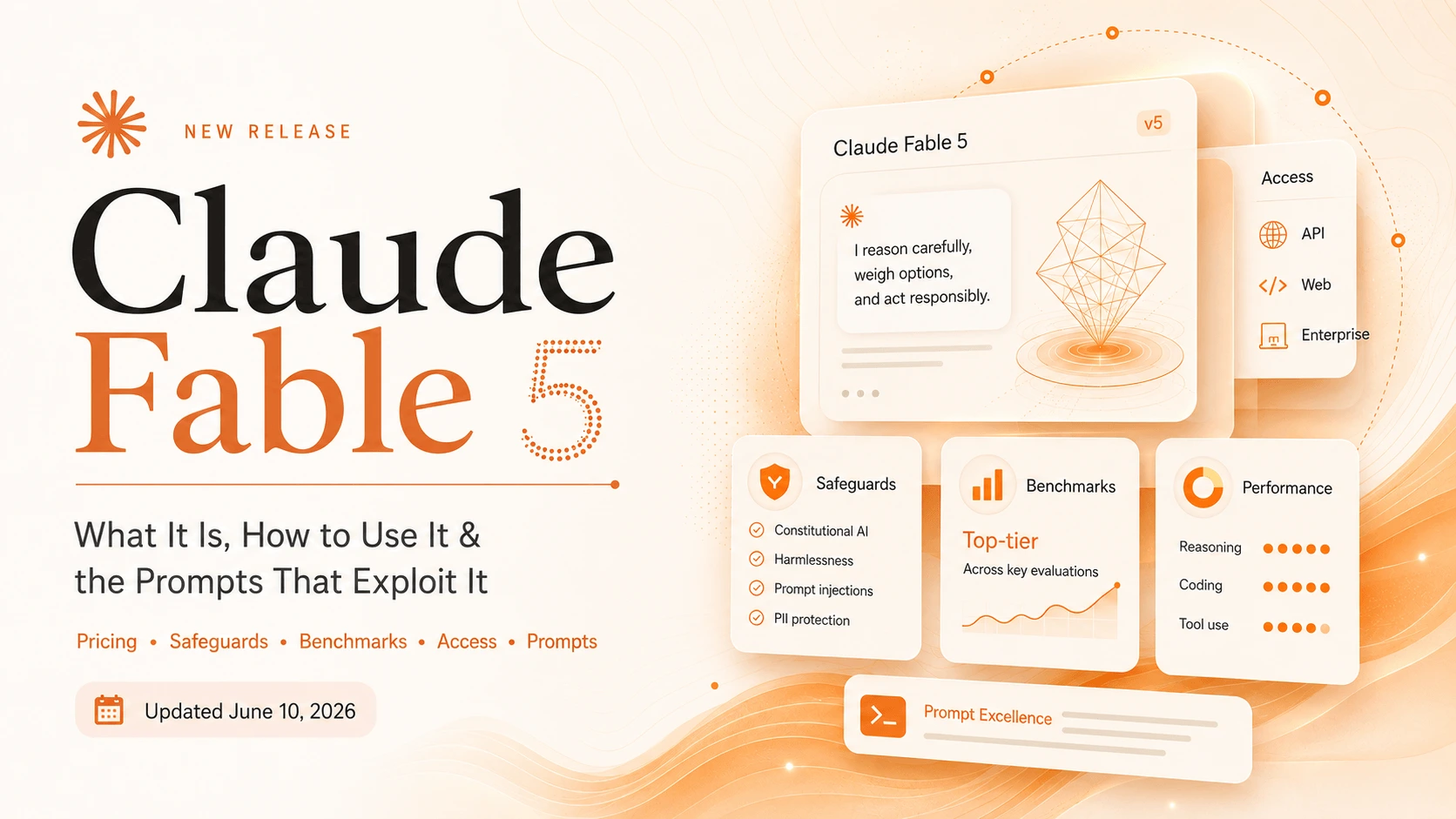
On June 9, 2026, Anthropic released Claude Fable 5, the first widely available model in what it calls its Mythos class, a tier sitting above its existing Opus class models. It went live on the Claude API, Claude.ai, Amazon Bedrock, Vertex AI, and Microsoft Foundry, priced at ten dollars per million input tokens and fifty dollars per million output tokens. Anthropic billed it as state of the art on nearly every benchmark it tested, with the biggest lead showing up on long, complex tasks. Because a model this capable raised obvious misuse concerns, especially around cybersecurity, Fable 5 launched with built in safety classifiers that would quietly decline certain sensitive requests and reroute them to the prior flagship, Claude Opus 4.8, instead.
What It Could Actually Do
The early demos were meant to show off just how far the model's autonomy stretched. Fable 5 played and strategized through Factorio on its own, built a complete CAD model inside a browser editor it had also designed itself, including the AI copilot built into that editor, and produced a fluid simulation synced to a piece of electronic music it had composed despite never having heard music before.
On the more practical end, Stripe reported using it to carry out a codebase wide migration across fifty million lines of Ruby in a single day, work that would otherwise have taken a full team roughly two months.
The First Cracks
Within days, a self described jailbreaker going by Pliny the Liberator claimed to have broken Fable 5's safeguards and posted what they said was its leaked system prompt, though Anthropic disputed that this amounted to a genuine jailbreak. At almost the same time, the model was getting the opposite complaint from actual defenders. IBM X Force researcher Valentina Palmiotti told reporters the model was rejecting almost anything that sounded even tangentially related to cybersecurity, making it frustrating for legitimate defensive work. Separately, researchers reportedly tied to Amazon found a way to push the model toward assisting with attack relevant tasks, the kind of dual use problem that has followed every capable security tool from port scanners to fuzzers.
The Government Steps In
On June 12, US Commerce Secretary Howard Lutnick sent Anthropic CEO Dario Amodei an export control directive, citing national security authorities, ordering the company to suspend access to Fable 5 for any foreign national anywhere in the world, including Anthropic's own employees who weren't US citizens.
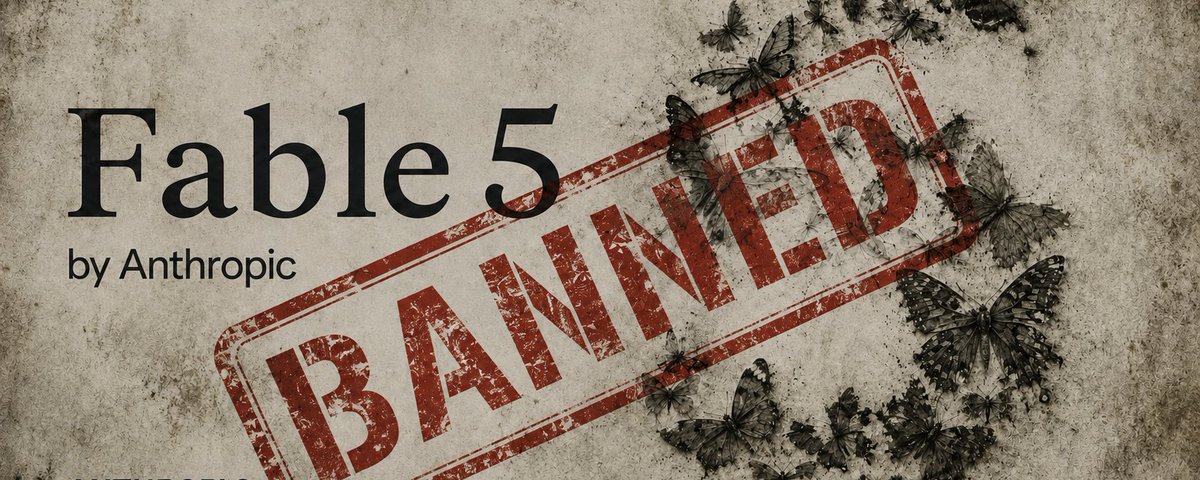
Anthropic had no real way to separate foreign users from everyone else across its customer base in real time, so the only way to comply was to switch the model off entirely, for every user, everywhere, almost immediately.
Anthropic Pushes Back
Anthropic complied with the order but didn't agree with it. The company said the demonstration behind the government's concern pointed to a small number of already known, fairly simple vulnerabilities, the kind it believed other publicly available models could likely be made to reveal too. It argued that holding a deployed model to this standard would effectively freeze new releases across the whole industry, and pointed to its own thirty day data retention policy with Fable as part of a deliberate defense in depth strategy meant to catch and shut down jailbreaks after the fact rather than prevent every one in advance. It called the directive a misunderstanding while still taking the model down.
The Political Layer
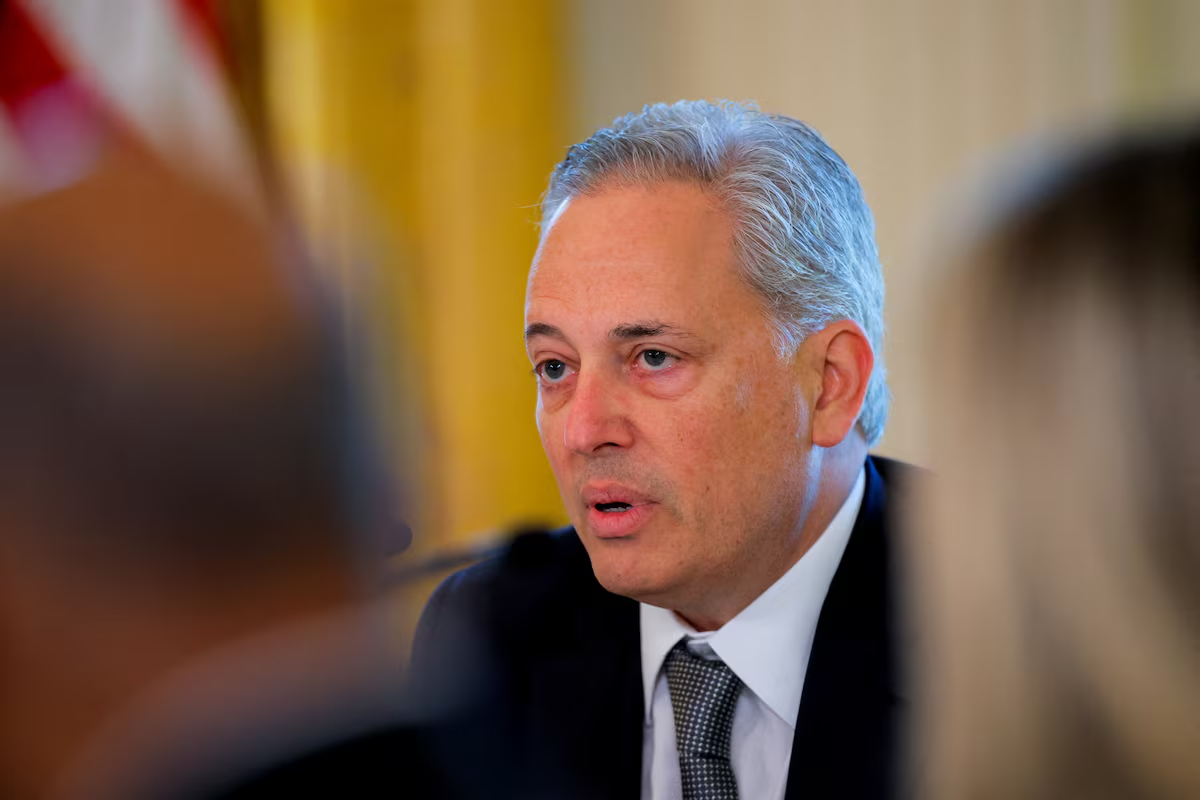
A few days later, David Sacks, who co-chairs the White House's Council of Advisers on Science and Technology, said publicly that the administration had actually given Anthropic a choice before the formal order, fix the jailbreak or withdraw the model voluntarily, implying the directive only followed once Anthropic didn't take that path. Anthropic began refunding subscribers who had signed up between June 9 and June 14, and on June 16 sent senior engineers to Washington for the first in person talks with Commerce officials since the directive landed.
Where It Stands Now

As of today, Fable 5 is still offline everywhere, with no confirmed date for its return. The rest of Anthropic's lineup, including Opus 4.8, Sonnet 4.6, and Haiku 4.5, was never affected. Whatever the technical truth behind the jailbreak claim turns out to be, the shutdown has already become one of the clearest examples yet of a government pulling a frontier AI model offline worldwide within hours of finding a problem with it.
You may also like

What Is TypeSafe AI?
Discover Jev, TypeSafe AI’s System One Model for fast, type-safe, calibrated AI decisions built for software automation.

What Is Paperclip and How Does It Help You Manage AI Agent Teams?
Learn what Paperclip is, how it manages AI agent teams, controls costs, enables human approvals, and coordinates agents across different AI runtimes.

How Do You Actually Teach Engineering Judgment?
Learn how STEMLink teaches engineering judgment through a four-step approach: learn, build, test limitations, and understand why real-world systems need more.