
Claude Opus 5
Discover what makes Claude Opus 5 Anthropic's most practical AI model yet. Learn how it improves coding, reasoning, enterprise workflows, and why it's emerging as one of the best AI models for developers.
Claude Opus 5
The AI industry has spent the past few years competing on one metric above all else: intelligence. Every new release has promised bigger models, better benchmarks, and increasingly advanced reasoning. While those improvements have pushed artificial intelligence forward, they haven't always translated into a better everyday experience for developers and businesses.
With Claude Opus 5, Anthropic has taken a different approach.
Instead of building the largest or most powerful model possible, the company focused on creating an AI assistant that delivers frontier-level performance while remaining practical, efficient, and affordable. The result is a model designed for real-world coding, knowledge work, long-running AI agents, and enterprise applications without the premium cost typically associated with top-tier AI systems. Anthropic describes Opus 5 as a significant step forward for its Opus family, offering performance close to Claude Fable 5 while maintaining Opus-tier pricing.
What Makes Claude Opus 5 Different?
Rather than chasing benchmark records alone, Claude Opus 5 was designed around usability.
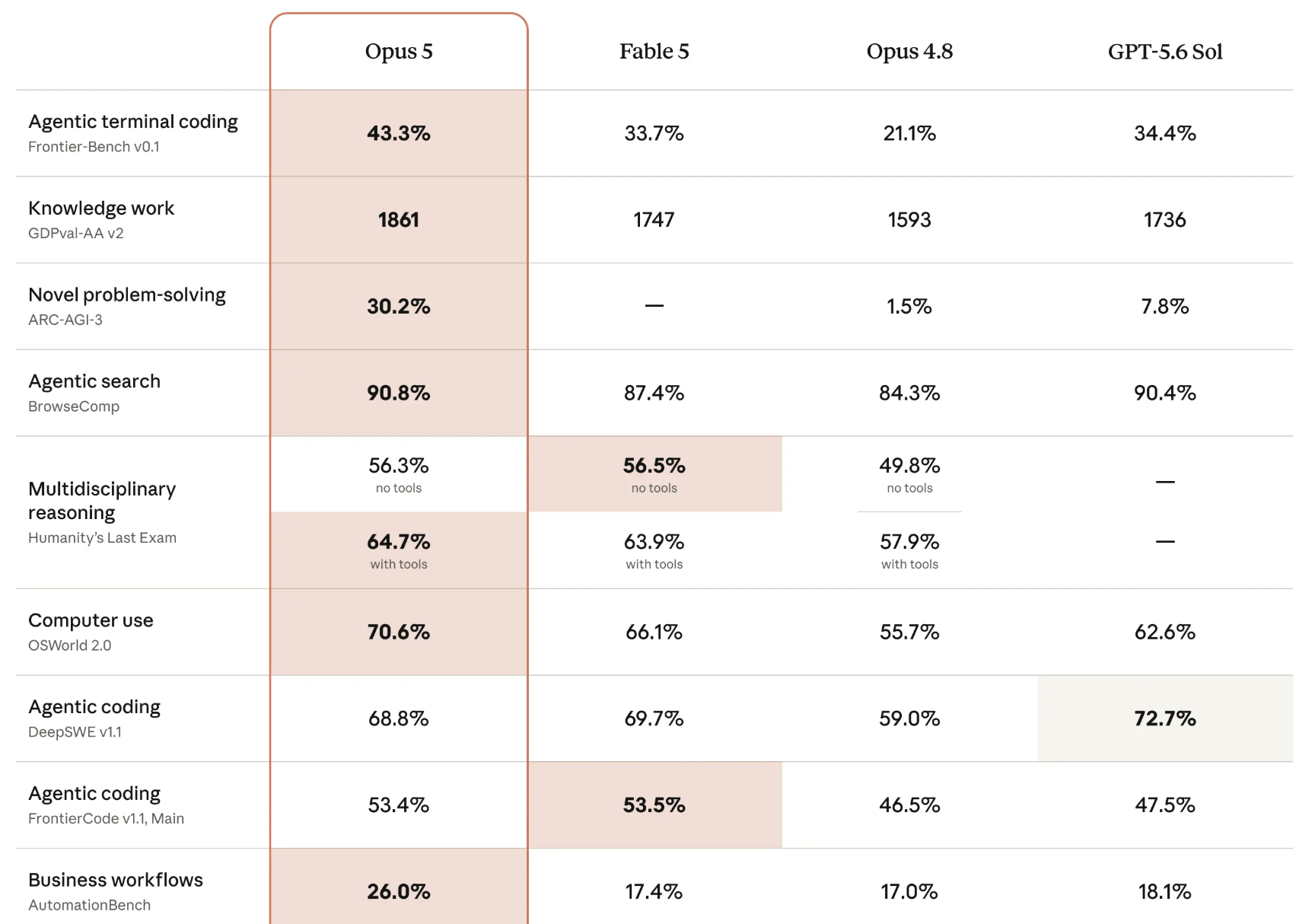
Developers rarely judge an AI model solely by benchmark scores. They care about whether it writes maintainable code, follows instructions accurately, understands project context, and produces reliable results over long sessions.
Claude Opus 5 improves across each of these areas.
According to Anthropic, the model offers substantial gains in coding, professional knowledge work, visual understanding, and long-running agent tasks. It also introduces improved reasoning while keeping pricing the same as Opus 4.8, making it considerably more accessible than larger frontier models.
Built for Developers, Not Just Demonstrations
Many AI models perform impressively during demonstrations but struggle when applied to large software projects.
Claude Opus 5 appears to address this challenge by focusing on consistency rather than flashy outputs.
Whether developers are debugging production applications, reviewing pull requests, generating documentation, or planning complex features, the model aims to provide dependable assistance throughout the entire workflow.
Instead of constantly attempting to redesign existing systems, Opus 5 generally produces cleaner implementations that integrate naturally into established codebases. This practical behaviour reduces unnecessary edits and allows engineering teams to spend more time building products instead of reviewing AI-generated changes.
For software teams working on production applications, reliability often matters more than raw intelligence.
Strong Coding Performance Without the Premium Price
One of the biggest announcements surrounding Claude Opus 5 is its pricing.
Anthropic positions the model as offering capabilities close to Claude Fable 5 while costing roughly half as much. Input pricing remains at $5 per million tokens, with $25 per million output tokens, matching Opus 4.8 pricing despite the performance improvements.
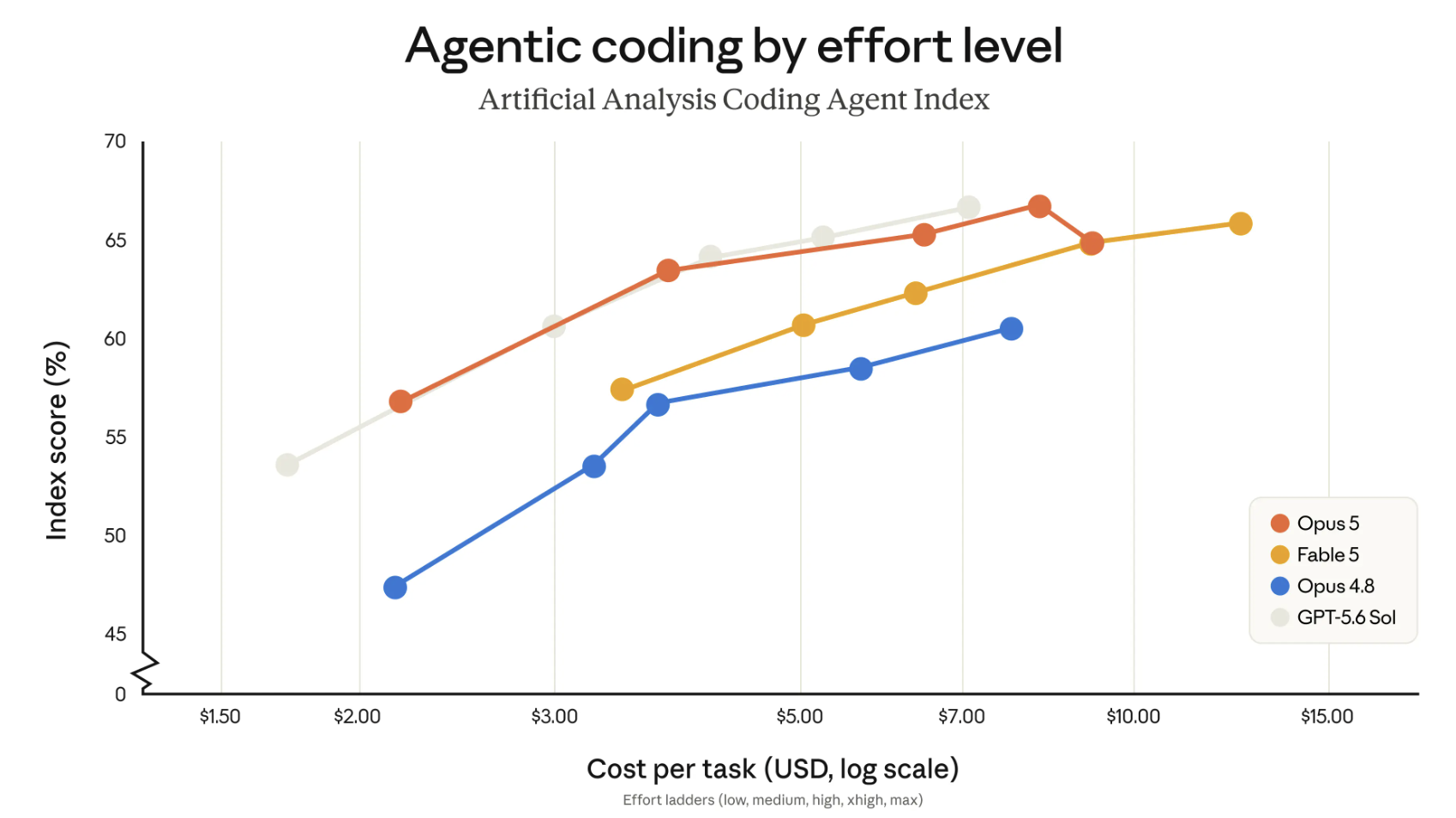
That pricing strategy makes frontier AI considerably more accessible for startups, independent developers, and organisations that need high-performance AI without significantly increasing operational costs.
Rather than reserving advanced capabilities for only the most expensive model tier, Anthropic is giving users a practical alternative that balances quality and affordability.
Better Long-Running AI Agents
As AI agents become increasingly capable of handling multi-step workflows, consistency has become just as important as intelligence.
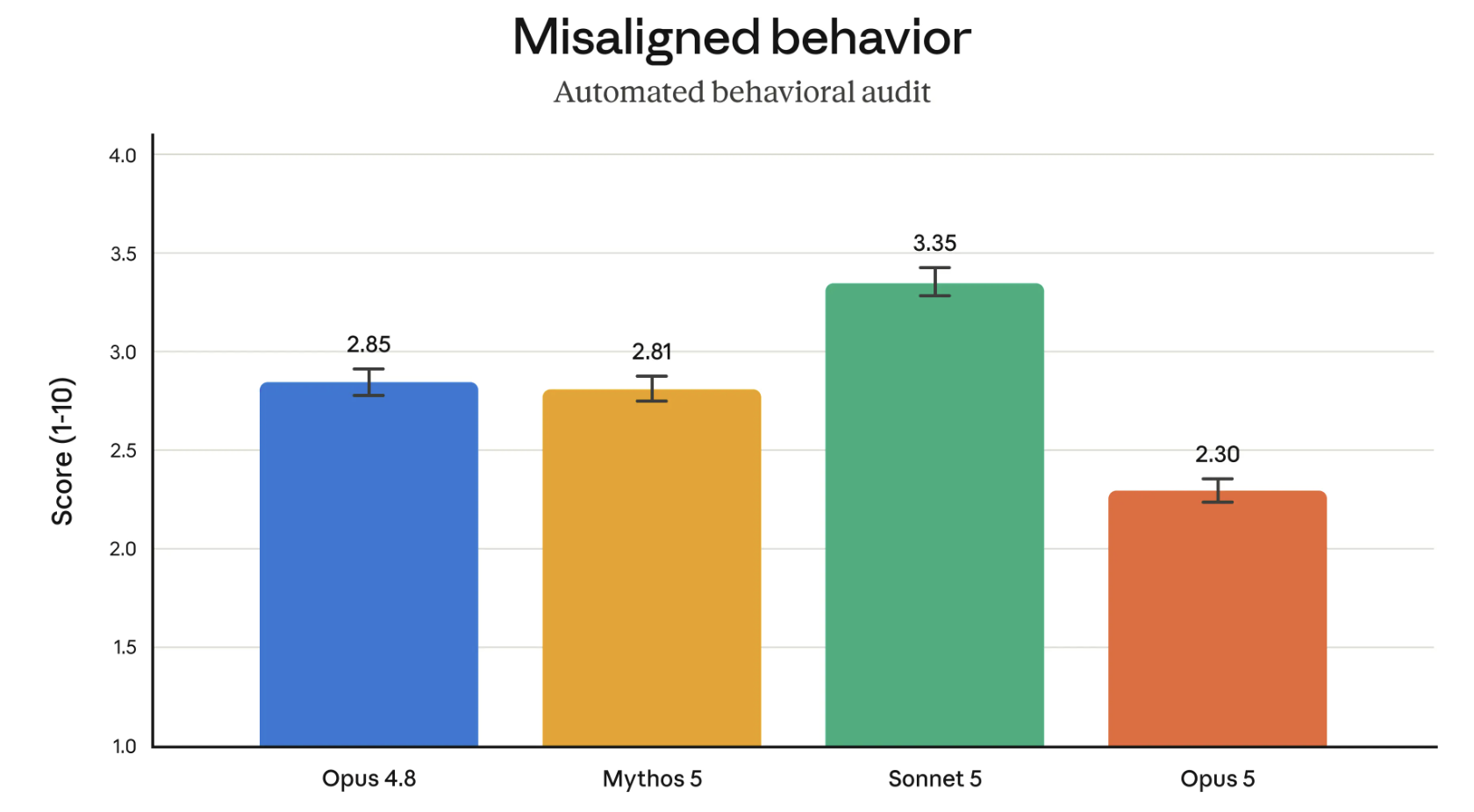
Claude Opus 5 was specifically designed to power long-running autonomous tasks. From complex coding projects to professional research and workflow automation, the model maintains context more effectively across extended conversations and task sequences.
This makes it particularly useful for developers building AI-powered applications, coding assistants, or enterprise automation systems where reliability over time is essential.
Enterprise-Ready Security and Alignment
One area where Anthropic continues to differentiate itself is AI safety.
Claude Opus 5 is described as the company's most aligned Opus model to date. According to Anthropic's behavioural evaluations, it demonstrates lower rates of deceptive behaviour, stronger adherence to safety policies, and reduced susceptibility to misuse compared with previous generations.
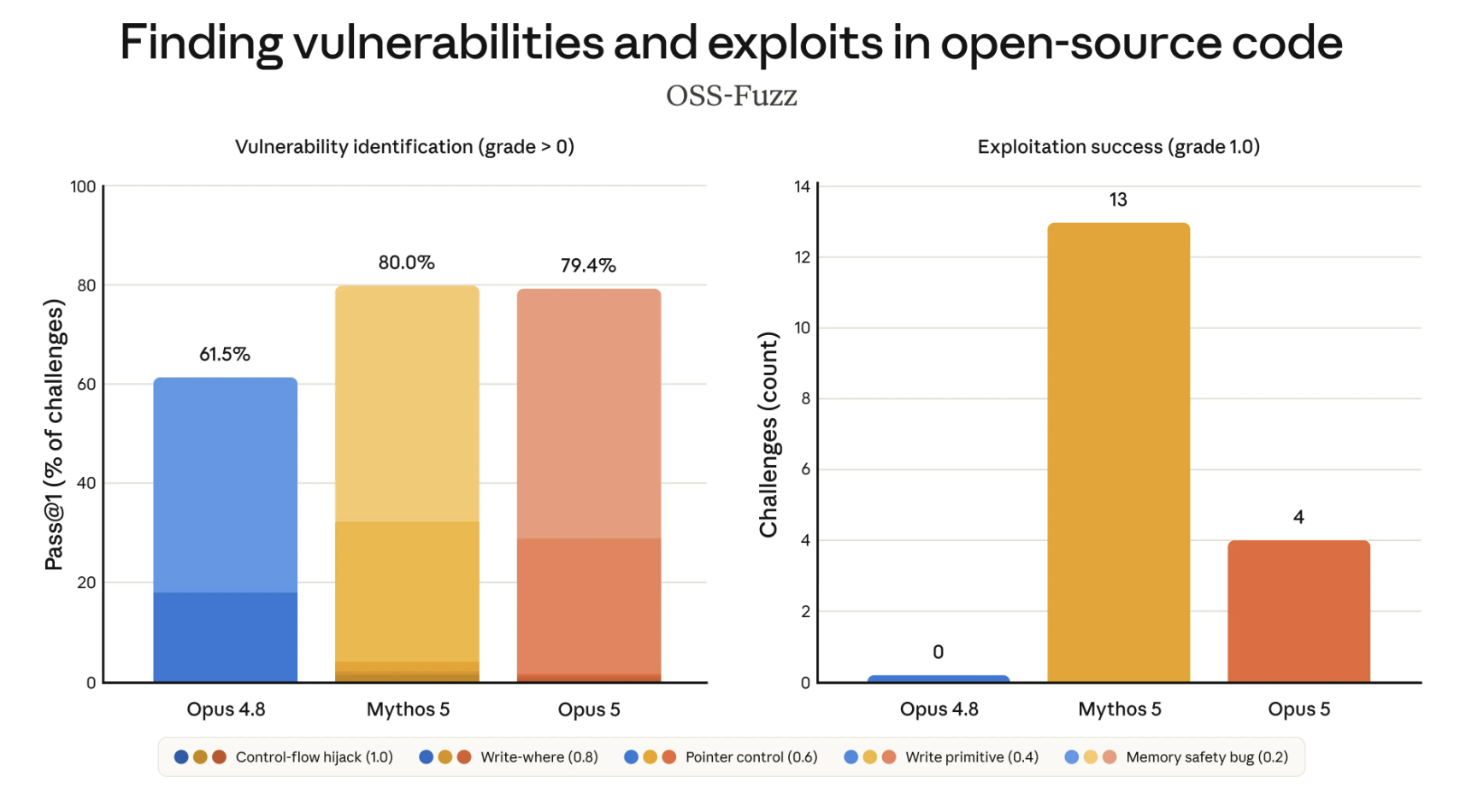
For enterprise customers, these improvements are particularly important.
Businesses adopting AI increasingly require models that can handle sensitive information responsibly while maintaining high levels of productivity. Opus 5 aims to strike that balance without introducing unnecessary restrictions for legitimate professional work.
Faster Responses When Speed Matters
Anthropic has also introduced a new Fast Mode for Claude Opus 5.
This optional setting allows users to receive responses significantly faster while maintaining the model's core capabilities, making it attractive for workflows where rapid interaction is more important than maximum reasoning depth.
Combined with improvements in coding performance and long-running reasoning, Fast Mode provides additional flexibility for developers choosing how they want the model to behave depending on the task.
Why Claude Opus 5 Could Become the Default AI Assistant
Perhaps the strongest argument for Claude Opus 5 is its versatility.
Instead of forcing developers to switch between different AI models depending on whether they're planning software architecture, writing code, debugging, documenting, or reviewing implementations, Opus 5 performs consistently across nearly every stage of development.
It isn't necessarily the absolute leader in every benchmark.
Instead, it offers something arguably more valuable—a dependable experience.
For many teams, having one model that performs exceptionally well across multiple disciplines is far more useful than maintaining several specialised assistants.
Final Thoughts
Claude Opus 5 represents a shift in how frontier AI models are being developed.
Rather than focusing solely on maximum intelligence, Anthropic has built a model that prioritises real-world usefulness, affordability, and dependable performance.
Its improvements in coding, reasoning, long-running agents, and enterprise safety make it one of the most balanced AI models currently available. Combined with lower pricing than Claude Fable 5 and stronger everyday usability, Opus 5 is positioned to become the preferred choice for many developers and businesses looking to integrate advanced AI into their workflows.
For anyone searching for an AI assistant capable of handling software engineering, professional knowledge work, and autonomous tasks without the premium cost of the highest-tier models, Claude Opus 5 is shaping up to be one of the most compelling releases of the year.
FAQs
Is Claude Opus 5 better than previous Opus models?
Yes. Anthropic says Claude Opus 5 improves coding performance, reasoning, professional work, and long-running agent capabilities while keeping the same pricing as Opus 4.8.
What is Claude Opus 5 best used for?
Claude Opus 5 is designed for software development, enterprise knowledge work, AI agents, research, automation, and complex professional workflows.
Is Claude Opus 5 cheaper than Claude Fable 5?
Yes. Anthropic positions Claude Opus 5 as offering performance close to Claude Fable 5 while costing approximately half as much.
Should developers upgrade to Claude Opus 5?
For developers looking for a balanced AI assistant that combines strong coding ability, reliable reasoning, enterprise-ready safety, and competitive pricing, Claude Opus 5 is one of the strongest options currently available.
You may also like

What Is TypeSafe AI?
Discover Jev, TypeSafe AI’s System One Model for fast, type-safe, calibrated AI decisions built for software automation.

What Is Paperclip and How Does It Help You Manage AI Agent Teams?
Learn what Paperclip is, how it manages AI agent teams, controls costs, enables human approvals, and coordinates agents across different AI runtimes.

How Do You Actually Teach Engineering Judgment?
Learn how STEMLink teaches engineering judgment through a four-step approach: learn, build, test limitations, and understand why real-world systems need more.