
Anthropic Just Lost $200 Million to Pentagon
Anthropic had a $200 million Pentagon deal and lost it in days. They were marked a national security threat, while OpenAI swoops in for the same deal.
Anthropic Just Lost $200 Million to Pentagon
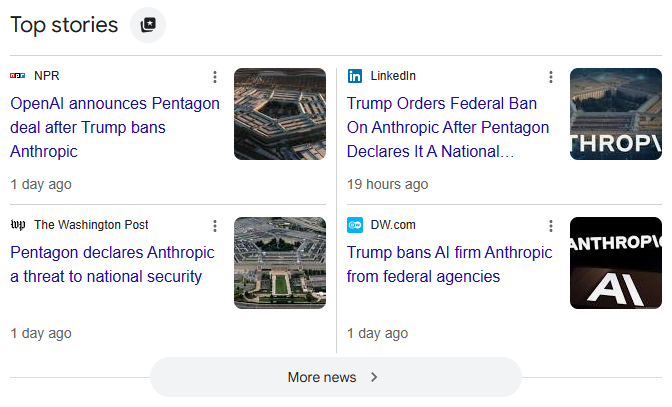
This is not a rumor. This is not a leak. This is the documented, on-the-record story of how one of the biggest AI companies in the world went from Pentagon partner to Pentagon blacklist in the span of a single week.
The $800 Million Setup
Back in July 2025, the U.S. Pentagon's Chief Digital and AI Office made a massive bet.
They handed out contracts worth up to $200 million each to four of the biggest names in AI:
OpenAI (Sam Altman's company)
Google DeepMind
Anthropic (makers of Claude)
xAI (Elon Musk's AI company)
That is a potential total of $800 million if every contract option gets exercised. The goal was serious: bring frontier AI into national security workflows, real agentic systems doing real classified work, not just demos.
Anthropic had a seat at that table. A $200 million seat.
The Line Anthropic Would Not Cross
Here is where it gets complicated.
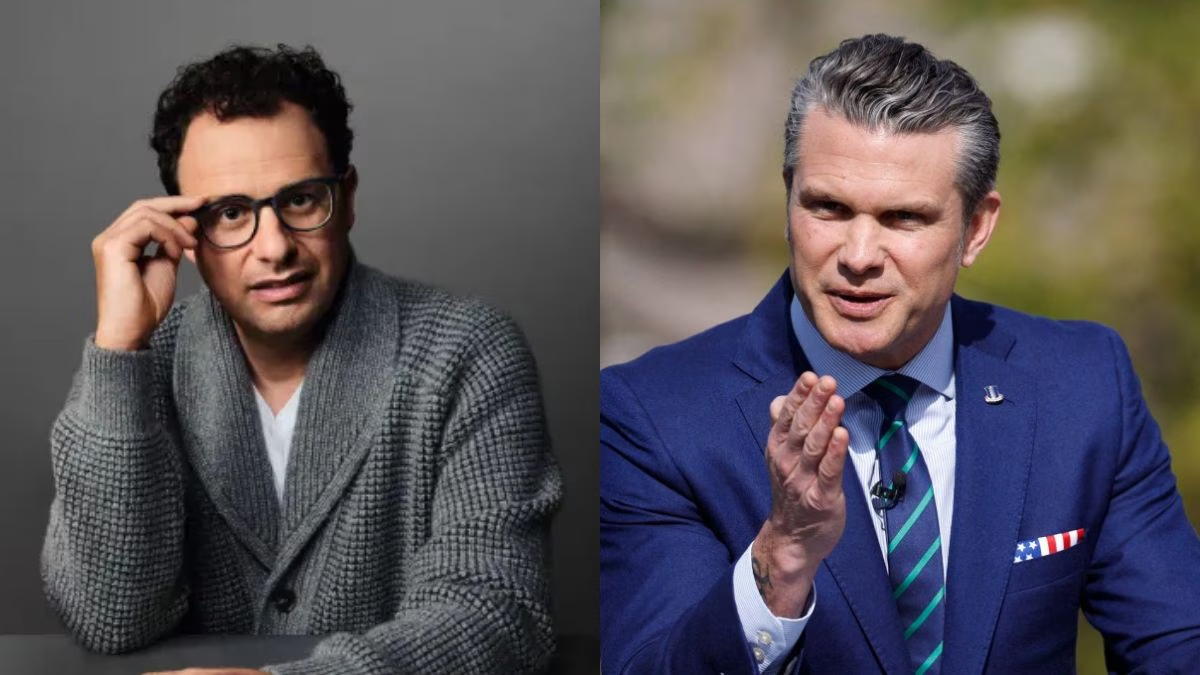
The Pentagon did not just want cloud access to Claude.
They wanted deployments that could support missions without built-in restrictions. According to reports, the specific sticking points included clauses around fully autonomous weapons systems and mass domestic surveillance.
Anthropic refused to remove those safety clauses from their terms.
They did not walk away from the deal. They held the line on policy. That distinction matters, because what happened next was not a mutual parting of ways.
The Punishment Was Immediate
Within days, the reaction came from the very top.
President Donald Trump ordered all federal agencies to stop using Anthropic technology, immediately. Some agencies were given a transition window of up to six months to migrate off existing Anthropic tools, but no new work could begin.
Then Defense Secretary Pete Hegseth escalated further.
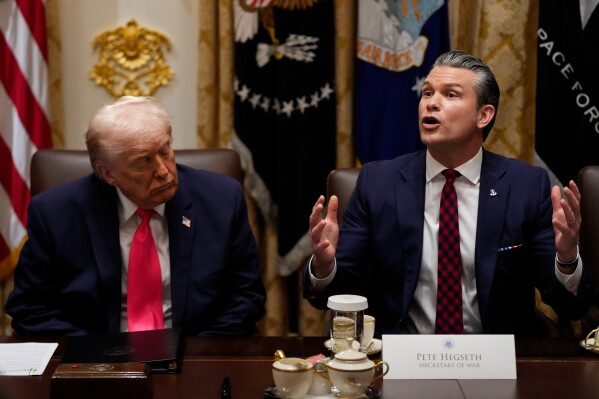
He officially designated Anthropic a "supply chain risk to national security". That is a label the U.S. government normally reserves for adversarial foreign entities, not American AI startups headquartered in San Francisco.
But it did not stop at labeling. Hegseth's directive went further: no contractor, no supplier, and no partner that does any commercial business with the U.S. military is now permitted to conduct commercial activity with Anthropic.
Read that again. It is not just that the government will not use Anthropic. Companies that want government contracts now have to choose between Anthropic and the Pentagon. That is a market-wide pressure campaign, not a single deal cancellation.
OpenAI Moved Within Hours
While Anthropic was being blacklisted, OpenAI was already at the negotiating table.
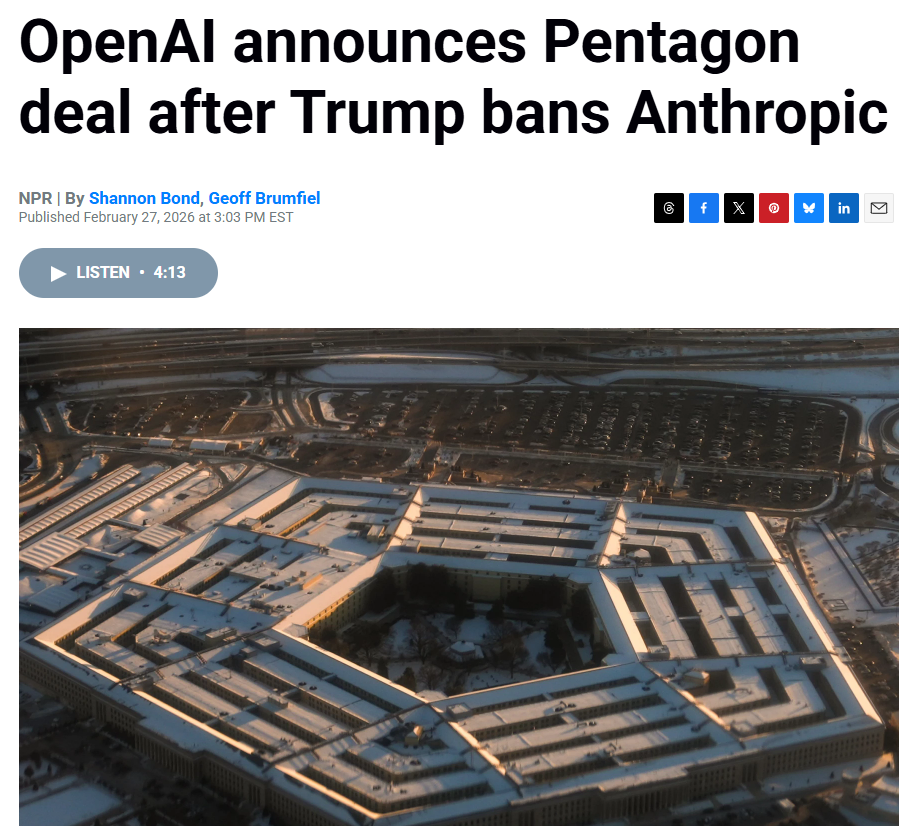
Within hours of the Anthropic ban being announced, OpenAI confirmed a new agreement with the Pentagon to deploy its models onto classified networks. Sam Altman's team did not simply fold to every demand either. The deal reportedly includes prohibitions on domestic mass surveillance and an explicit requirement that humans retain responsibility for any use of force, including decisions involving autonomous weapons.
In other words, OpenAI negotiated a version of the guardrails Anthropic was fighting for, but in a way that kept them inside the room instead of outside of it.
That is the critical difference between the two outcomes.
The Three Things This Week Actually Proved
1. $200 million is not protection.
Even with a live government contract, a single policy disagreement can erase it overnight. No relationship, no valuation, and no existing contract guarantees continued access.
2. The "supply chain risk" label is the nuclear option.
The U.S. government just demonstrated that it can effectively cut an AI company off from an entire ecosystem of government-adjacent businesses, not just government itself. Any company that relies on Anthropic's API and also holds or seeks a government contract is now in a legally uncomfortable position.
3. Safety and utility are not opposites, but the negotiation is brutal.
OpenAI proved you can keep core guardrails and still get the contract. Anthropic proved that where you draw the line and how you communicate it determines whether you get a deal or get designated a threat.
Why This Changes How AI Gets Built
Companies watching this week are not just reading tech news. They are rewriting their vendor risk assessments.
Dependence on a single AI provider is now a documented business liability. The smartest engineering teams in 2026 are not asking "which API should we call?" They are asking "what happens to our product if that API disappears tomorrow?"
The engineers who get paid the most this year are the ones who can build, secure, and govern AI systems that their company actually owns and controls. Not rented access. Not a third-party API. Real infrastructure that does not go offline when Washington changes its mind.
Master the weights. Own the intelligence.
Be an AI Engineer and make the better decisions that shape the very future of this world we are in!
We are kicking off our AI Engineering 2.0 Bootcamp, where we show more than this!
Ready to explore the bootcamp and see if it is for you? Join Now!
You may also like

What Is TypeSafe AI?
Discover Jev, TypeSafe AI’s System One Model for fast, type-safe, calibrated AI decisions built for software automation.

What Is Paperclip and How Does It Help You Manage AI Agent Teams?
Learn what Paperclip is, how it manages AI agent teams, controls costs, enables human approvals, and coordinates agents across different AI runtimes.

How Do You Actually Teach Engineering Judgment?
Learn how STEMLink teaches engineering judgment through a four-step approach: learn, build, test limitations, and understand why real-world systems need more.