
Real time gesture recognition
Explore the transformative potential of TensorFlow.js for building real-time AI web applications. Discover how this powerful library can enhance user experiences through features like image recognition, object detection, and natural language processing, all while ensuring privacy and low latency.
Real time gesture recognition
With the exponential growth of AI-driven technologies, web developers today can incorporate intricate machine learning models within their applications. TensorFlow.js real-time AI web apps offer a compelling solution to create dynamic, responsive user experiences. But what exactly is TensorFlow.js, and how does it enable real-time machine learning in JavaScript?
Understanding TensorFlow.js

TensorFlow.js is an open-source library that allows developers to run and train machine learning models directly in the browser. The ability to execute client-side AI with TensorFlow.js offers multiple advantages, including reduced server load, improved user privacy, and seamless real-time interactivity. As interest in sophisticated AI-powered web applications grows, leveraging TensorFlow.js can greatly enhance the capabilities of any web platform.
Why Build AI-Powered Web Applications?
Interactive User Experience: Real-time AI enables web applications to respond immediately to user actions, making the interaction feel more intuitive and dynamic.
Low Latency: By running models in the browser, developers can minimize latency, delivering results faster compared to server-hosted AI solutions.
Offline Functionality: TensorFlow.js can be used offline, providing uninterrupted service even without an internet connection.
Improved Privacy: Client-side processing ensures that sensitive user data is not sent to external servers.
Getting Started with TensorFlow.js
To start building AI-powered web applications with TensorFlow.js, you’ll first need to integrate the library into your project. The simplest method is including the TensorFlow.js script in your HTML:
<script src="https://cdn.jsdelivr.net/npm/@tensorflow/tfjs"></script>
Once integrated, you can begin constructing AI models for diverse applications such as real-time object detection using TensorFlow.js and image recognition, both of which are increasingly popular for enhancing user experiences.
Real-Time Machine Learning in JavaScript: Core Applications
1. Real-Time Image Recognition
One compelling use case is TensorFlow.js for real-time image recognition. By leveraging pre-trained models like MobileNet, developers can quickly deploy image classification in web apps. This functionality can support tasks ranging from identifying product features in online shopping to verifying identity in security systems.
For instance, imagine an e-commerce platform that allows users to upload an image of a product. The application can use TensorFlow.js to recognize and suggest similar items in stock, creating a seamless shopping experience.
2. Real-Time Object Detection
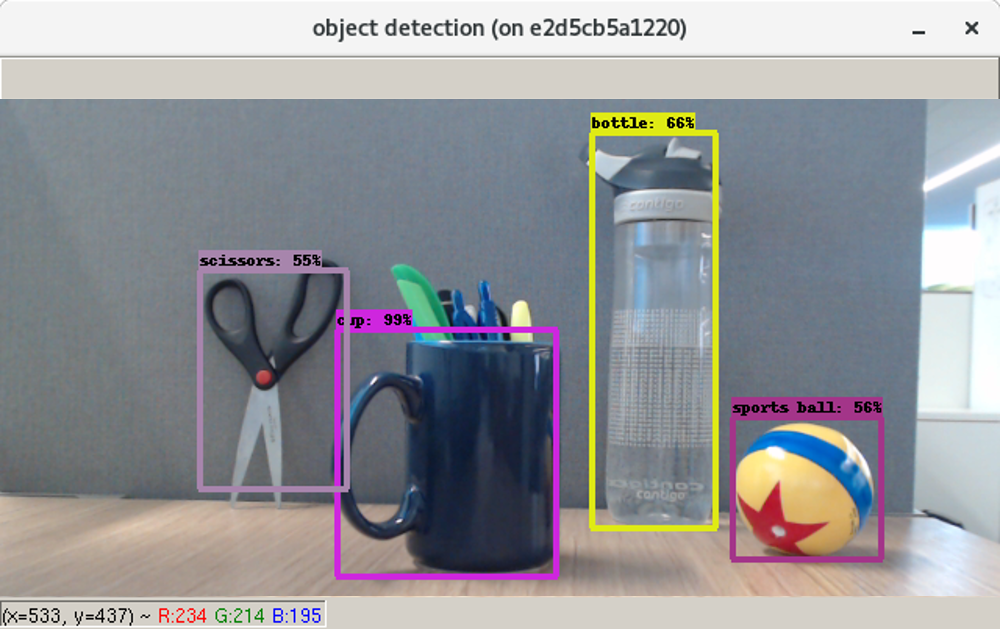
Similar to image recognition, real-time object detection can significantly enrich web applications. By utilizing models like COCO-SSD in TensorFlow.js, developers can detect and track objects in live video feeds directly within the browser. This feature is particularly useful in applications like interactive gaming, augmented reality, and even real-time traffic monitoring systems.
For a richer learning experience, consider enrolling in a Fullstack Engineering boot camp, which covers AI and full-stack development integration.
3. Natural Language Processing (NLP)
TensorFlow.js for real-time natural language processing (NLP) is another exciting frontier. Integrating NLP features into web applications means you can build chatbots, sentiment analysis tools, or translation services that operate entirely within the user’s browser. This ensures quicker processing times and improved privacy.
Implementing AI Models in the Browser

Deploying machine learning models in web browsers via TensorFlow.js is straightforward. Pre-trained models can be imported to handle specific tasks, or you can build custom models using TensorFlow.js layers. Here’s a basic example of implementing a pre-trained model for image classification:
const model = await tf.loadLayersModel('path/to/model.json');
This command loads a model, which can then be used for predictions. Once the model is loaded, you can perform real-time AI inference with TensorFlow.js by feeding it data and getting results instantly.
Enhancing Web Applications with Real-Time AI
Incorporating interactive AI features in web apps not only enhances user engagement but also adds considerable value to your projects. Using TensorFlow.js, you can easily integrate AI models that respond dynamically to user inputs in sectors like health care, education, finance, and beyond.
Example: Real-Time Face Detection

Face detection is a prime example of how enhancing web applications with real-time AI brings innovation to the forefront. Implementing this feature can enhance website security measures, allowing for automatic verification processes without requiring additional hardware.
Example: Sentiment Analysis in Social Platforms
Real-time sentiment analysis can revolutionize user interaction on social media and content platforms. By providing instant feedback and emotional context, developers can create more engaging platforms, offering users deeper insights into online discussions.
Actionable Tips for Using TensorFlow.js
Start small with basic models before attempting more complex AI applications.
Experiment with TensorFlow.js's APIs to understand their capabilities and limitations.
Leverage community resources and pre-built models to accelerate development.
Pay attention to performance optimizations within the browser to ensure smooth operation.
Key Takeaways
Building real-time AI functionalities into web applications using TensorFlow.js opens up a world of possibilities for developers. Whether you opt for real-time image recognition, real-time object detection, or explore real-time natural language processing, the potential to innovate and captivate users is vast.
Through the lens of AI, real-time features can transform how users interact with your applications, providing responsive, dynamic, and intelligent functionalities that redefine the future of web technology.
You may also like

What Is TypeSafe AI?
Discover Jev, TypeSafe AI’s System One Model for fast, type-safe, calibrated AI decisions built for software automation.

What Is Paperclip and How Does It Help You Manage AI Agent Teams?
Learn what Paperclip is, how it manages AI agent teams, controls costs, enables human approvals, and coordinates agents across different AI runtimes.

How Do You Actually Teach Engineering Judgment?
Learn how STEMLink teaches engineering judgment through a four-step approach: learn, build, test limitations, and understand why real-world systems need more.