
Meta Muse Spark
Discover Meta's Muse Spark, a powerful multimodal AI model built for advanced reasoning, coding, long-context processing, and agentic AI. Learn its key features, capabilities, and how it's shaping the future of AI-powered applications.
Meta Muse Spark
Artificial intelligence is evolving at an incredible pace, and every major technology company is racing to build more capable, reliable, and intelligent models. Meta has now entered the spotlight with Muse Spark, its latest multimodal AI model designed to power the next generation of intelligent applications and AI agents.
Unlike traditional language models that primarily focus on text, Muse Spark is built to understand multiple forms of information including text, images, documents, and more while reasoning through complex tasks and interacting with external tools. The result is an AI model that moves beyond conversation and becomes an active problem-solving assistant.
What Is Muse Spark?
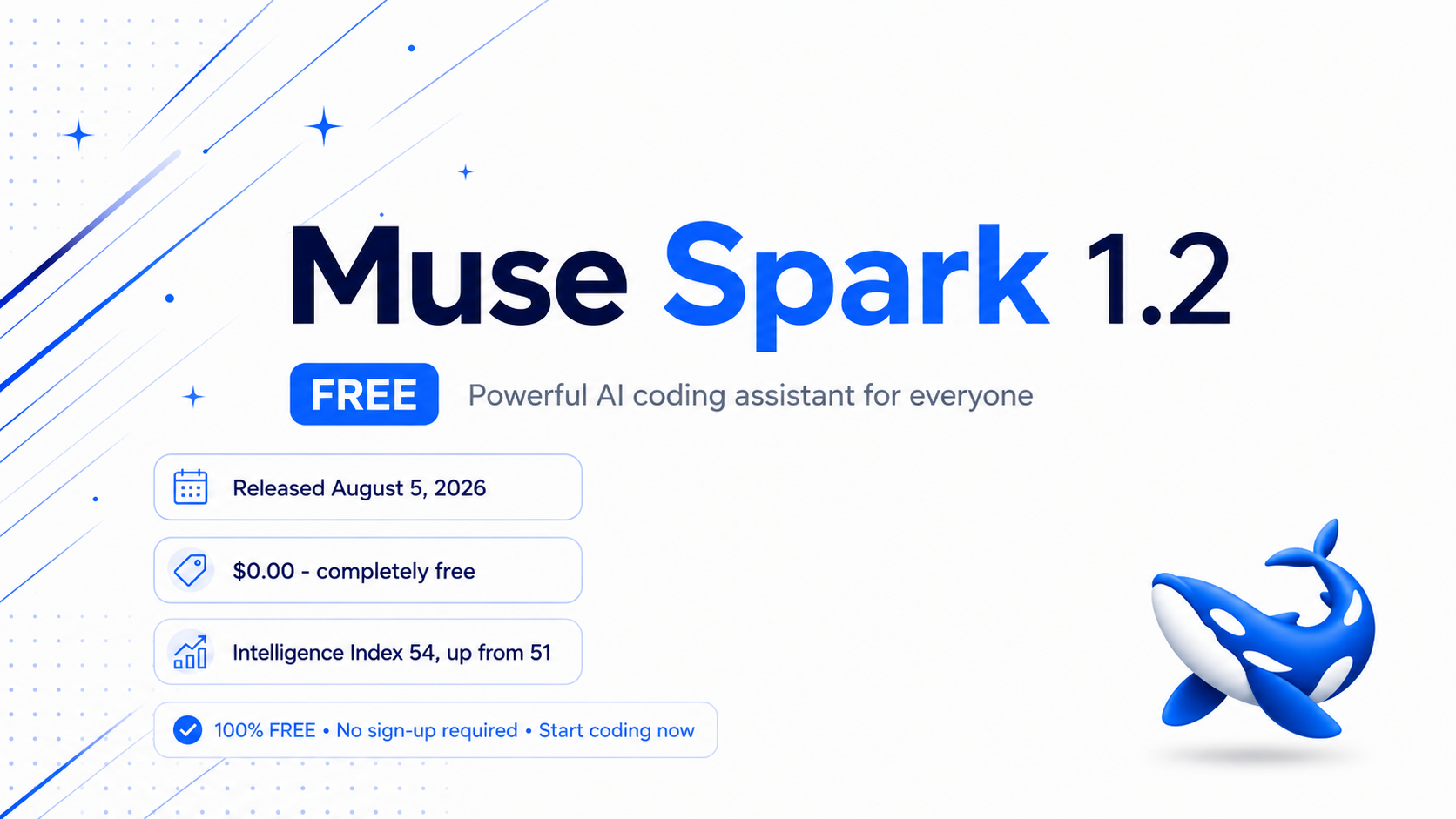
Muse Spark is Meta's flagship multimodal reasoning model available through the Meta Model API. It is designed to help developers build AI applications capable of understanding different types of content, making decisions, writing code, analyzing documents, and completing sophisticated workflows.
One of its biggest goals is enabling agentic AI AI systems that can plan, reason, use tools, and execute tasks with minimal human intervention.
Instead of simply responding to prompts, Muse Spark can serve as the "brain" behind AI assistants that automate real-world work.
Key Features
Advanced Reasoning
Muse Spark is built for tasks that require logical thinking rather than simple text generation. It can analyze complex problems, break them into smaller steps, and produce more thoughtful responses.
This makes it well suited for business automation, research, software development, and decision support.
Native Multimodal Understanding
Modern AI applications rarely deal with text alone.
Muse Spark can process:
Text
Images
PDF documents
Visual content
Mixed-input workflows
Developers can build applications that understand multiple data formats without switching between specialized models.
Massive Context Window
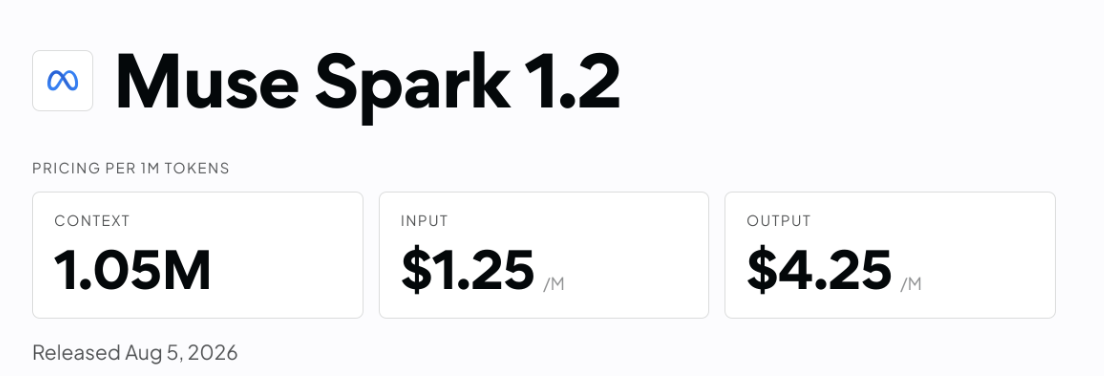
One of Muse Spark's standout capabilities is support for an extremely large context window up to approximately one million tokens.
This allows developers to provide entire codebases, lengthy research papers, technical documentation, or multiple documents in a single conversation without constantly breaking information into smaller chunks.
For enterprise applications, this is a significant advantage.
Tool Use and AI Agents
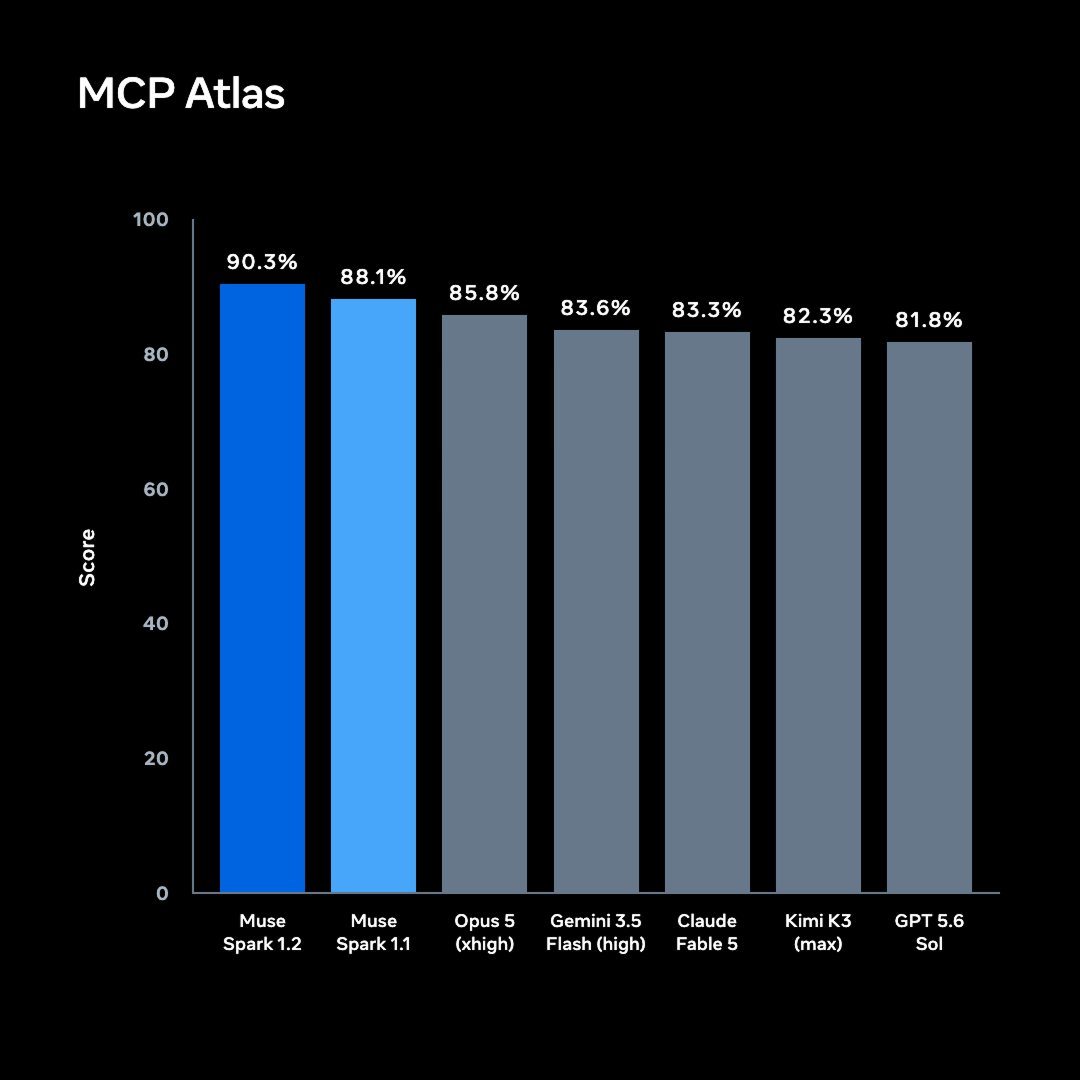
Muse Spark is designed to work alongside external tools.
Instead of only answering questions, it can:
Search the web
Call APIs
Generate structured outputs
Execute multi-step workflows
Use developer-defined tools
These capabilities enable developers to build AI agents that complete tasks instead of simply generating text.
Coding Assistance
Software development remains one of AI's fastest-growing applications.
Muse Spark offers strong coding capabilities, including:
Code generation
Debugging assistance
Code explanation
Refactoring suggestions
Software reasoning
Meta has also introduced Muse Code, an AI coding agent powered by Muse Spark, capable of planning, writing, testing, and debugging software projects.
Designed for Modern AI Applications
Muse Spark is intended for developers building:
AI assistants
Coding copilots
Enterprise automation systems
Customer support agents
Research assistants
Knowledge management platforms
Document analysis tools
Workflow automation solutions
Its multimodal capabilities make it suitable for industries ranging from healthcare and finance to education and software engineering.
OpenAI-Compatible API
One of the most developer-friendly aspects of Muse Spark is its support for OpenAI-compatible APIs.
Organizations that already use OpenAI-based SDKs can migrate many existing applications with minimal code changes, reducing integration time and simplifying adoption.
This lowers the barrier for teams looking to experiment with Meta's AI ecosystem.
What Makes Muse Spark Different?
The AI landscape has become increasingly competitive, with companies focusing on building models that are not only larger but also more practical.
Muse Spark emphasizes:
Strong reasoning capabilities
Multimodal intelligence
Long-context understanding
Tool integration
Enterprise-ready performance
Agentic workflows
Rather than acting as a standalone chatbot, it is designed to become the foundation for intelligent software systems that can collaborate with users and automate complex work.
The Bigger Picture
The release of Muse Spark reflects a broader shift in artificial intelligence.
The industry is moving beyond simple text generation toward AI systems that can understand multiple forms of information, interact with software, and complete real-world tasks.
Future AI applications will likely rely less on isolated chatbots and more on intelligent agents capable of reasoning, planning, and taking meaningful action.
Muse Spark positions Meta as a strong competitor in this rapidly evolving space, offering developers a powerful platform for building the next generation of AI-powered products.
Final Thoughts
Meta's Muse Spark represents more than another large language model it signals the growing importance of multimodal reasoning and agentic AI in modern software development.
With advanced reasoning, multimodal understanding, long-context processing, tool use, and coding capabilities, Muse Spark provides developers with a flexible foundation for creating smarter, more capable applications.
As AI continues to evolve, models like Muse Spark demonstrate that the future isn't just about generating better text it's about building intelligent systems that can understand, reason, and help solve increasingly complex problems.
You may also like

What Is TypeSafe AI?
Discover Jev, TypeSafe AI’s System One Model for fast, type-safe, calibrated AI decisions built for software automation.

What Is Paperclip and How Does It Help You Manage AI Agent Teams?
Learn what Paperclip is, how it manages AI agent teams, controls costs, enables human approvals, and coordinates agents across different AI runtimes.

How Do You Actually Teach Engineering Judgment?
Learn how STEMLink teaches engineering judgment through a four-step approach: learn, build, test limitations, and understand why real-world systems need more.