
Is GLM-5.2 the best open-weight AI model?
Z.AI’s groundbreaking 744B Mixture-of-Experts (MoE) model is shattering the proprietary monopoly. Boasting an MIT license, GLM-5.2 rivals GPT-5.5 and Claude Opus on coding, reasoning, and design benchmarks. Discover how this self-hosted frontier LLM delivers complete data control without compromising on performance.
Is GLM-5.2 the best Open Weight Model?
For years, there was a deal in AI: if you wanted the best models, you paid proprietary vendors and followed their rules. If you wanted control, you accepted worse models. GLM-5.2 breaks that completely.
What is GLM-5.2?
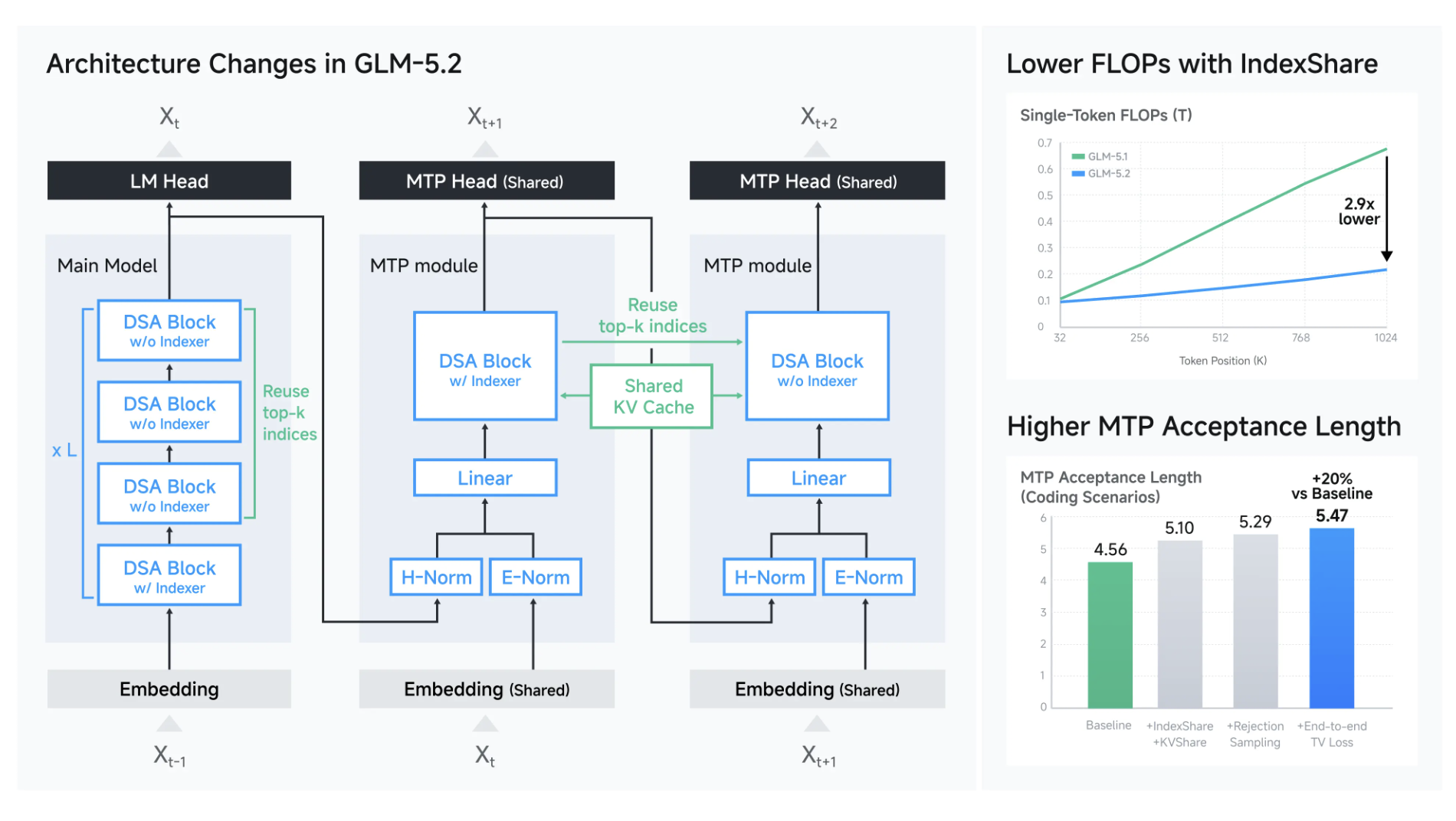
It's a 744-billion-parameter model from Z.AI that you can download and run yourself. The trick is it uses a Mixture-of-Experts architecture, so only about 40 billion parameters are active per request. That means it performs like a frontier model without needing frontier-scale hardware.
And it's released under MIT license. That means you can use it commercially, fine-tune it, run it wherever you want.
Why People Care
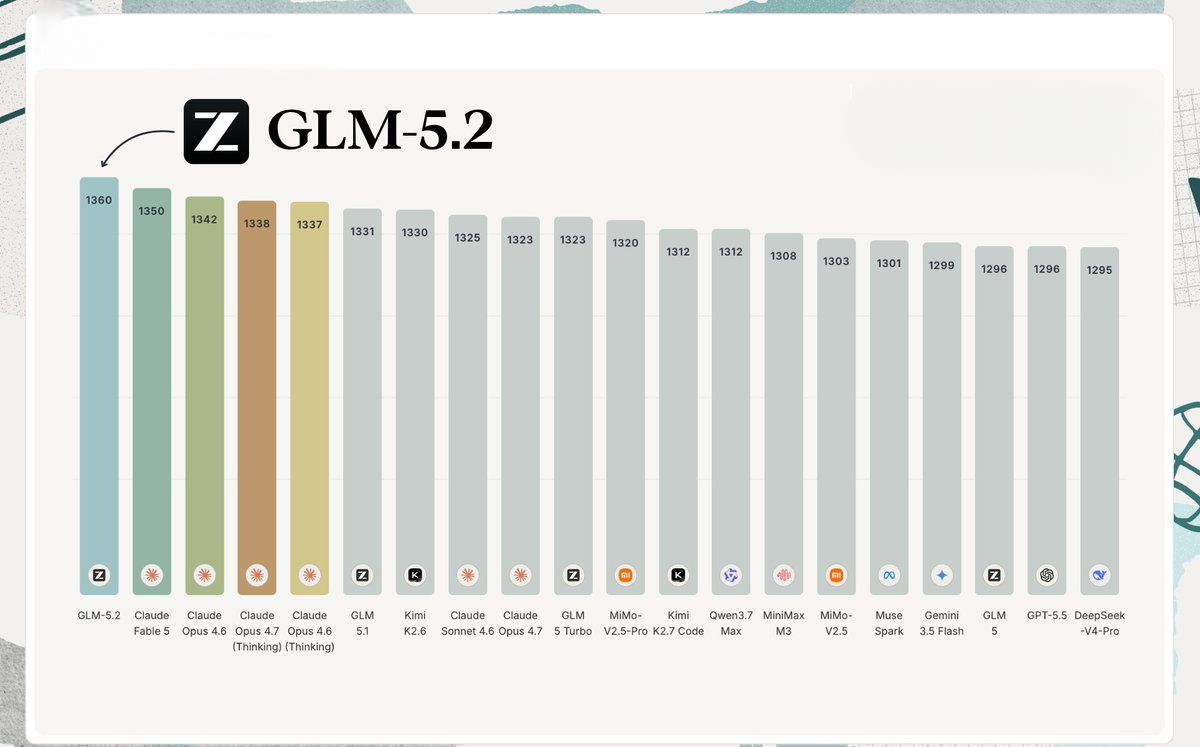
On real benchmarks, GLM-5.2 ranks 4th overall across all models. Not 4th among open weight models. 4th overall. It beats Claude Opus on design tasks. It competes with Claude Opus on coding. On practical reasoning tasks (GDPval-AA), it scores 1524 versus GPT-5.5's 1514.
The design understanding is the headline. Proprietary models have always had an edge on "taste" understanding what looks good, what works visually. GLM-5.2 is actually better at this than Claude and GPT models. That's not supposed to happen with open weight models.
For Developers
If you build software, this matters. GLM-5.2 handles:
Multi-file code generation without losing track of imports
Debugging by reading stack traces and understanding the actual problem
Real GitHub issues (scores 29 on DeepSWE, same tier as Claude Opus 4.7)
Python, TypeScript, Rust, Go, SQL without the model struggling
You can run this on your own GPUs. No API dependency. No rate limits. Fine-tune it on your codebase.
What You Actually Get
The open-weight part matters more than people realize. You can:
Deploy it on your servers, no data leaving your infrastructure
Fine-tune on proprietary data without licensing headaches
Not worry about a vendor changing terms or blocking your use case
Modify it however you need to
When proprietary models got blocked earlier this year, companies with GLM-5.2 weights just kept working. That's not a small thing if you run a real product.
The Honest Truth
It's not perfect. GLM-5.2 is slower to respond than some proprietary models. It uses more tokens to solve problems (43k vs GPT-5.5's 16k). The tooling ecosystem is brand new. If you need instant responses or maximum efficiency, you might still want something else.
But if you want control, capability, and options? GLM-5.2 is the answer.
Why Now?
Meta proved open-weight could compete. DeepSeek showed it could be cheap. GLM-5.2 shows it can actually be better at specific things that matter.
The deal where you pay for capability is breaking. Organizations now have a real choice. That changes pricing. That changes who builds what. That changes everything about how companies think about AI infrastructure.
How to Use It
You can download weights from Hugging Face, use Z.AI's API if you don't want to manage servers, or run it yourself on decent GPU hardware. It works with vLLM, Ollama, and other tools. Fine tuning is straightforward.
The MIT license means whatever you build is yours.
Bottom Line
For the first time, frontier-class AI isn't locked behind a proprietary wall. That's the moment. GLM-5.2 is the model that makes it real.
If you're building anything serious with AI, you should at least try it.
You may also like

What Is TypeSafe AI?
Discover Jev, TypeSafe AI’s System One Model for fast, type-safe, calibrated AI decisions built for software automation.

What Is Paperclip and How Does It Help You Manage AI Agent Teams?
Learn what Paperclip is, how it manages AI agent teams, controls costs, enables human approvals, and coordinates agents across different AI runtimes.

How Do You Actually Teach Engineering Judgment?
Learn how STEMLink teaches engineering judgment through a four-step approach: learn, build, test limitations, and understand why real-world systems need more.